Monster Claw: A Designer’s Review for Small Business Merch
As an embroidery designer who has spent years digitizing and testing files for commercial use, I approach every new machine embroidery design with a critical eye. It is not just about whether the image looks cute on a screen; it is about how it performs on fabric, how it holds up in the wash, and how it elevates a brand. Recently, I reviewed the Monster Claw design, and I want to share my professional perspective on how this asset can serve small business owners, apparel decorators, and handmade brands.
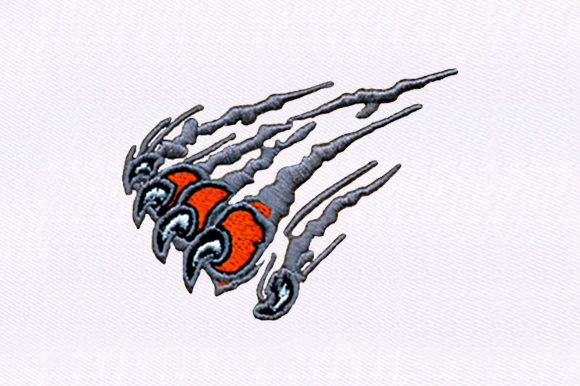
The first impression of Monster Claw is striking. It does not feel overly rustic or delicate; instead, it carries a bold, playful energy that commands attention. For businesses looking to inject personality into their small business merch, this design offers a unique visual hook. While it fits naturally within the Halloween category, its utility extends far beyond seasonal spookiness. It serves as a powerful graphic element for creative studios, pet brands, bakeries with edgy branding, or boutique shops that want to stand out from the minimalist crowd.
Evaluating Technical Specifications for Production
Before running any digital embroidery file on a production machine, we must look at the hard data. The Monster Claw comes with a hoop size of 4×4 inches, with actual dimensions of W 3.76 in by H 2.77 in (95.5×70.3 mm). This compact footprint is ideal for versatile placement. With 9900 stitches, the design has a moderate density. This is a crucial detail for us as designers. A stitch count under 10,000 for this surface area suggests a solid fill without being excessively heavy, which helps prevent puckering on lighter fabrics.
The availability of multiple EMBROIDERY FILE FORMATS including DST, PES, JEF, EXP, and VIP ensures compatibility with most major home and commercial machines. However, always verify that your specific machine software reads the format correctly before committing to a large batch. The variety of formats like ART, CND, and HUS also means that legacy machines can still utilize this asset, broadening its appeal for older shop setups.
Strategic Applications for Brand Identity
How does Monster Claw function in a real-world business scenario? Let’s look at embroidered patch production. Given the 4×4 hoop constraint, this design is perfectly sized for iron-on or sew-on patches. Patches are a high-margin product for Etsy sellers and craft businesses. You can produce these in bulk and sell them as standalone accessories or use them to upgrade plain garments.
For custom apparel, consider the placement carefully. On a standard work shirt or hoodie, this design works beautifully as a left-chest logo accent. It is large enough to be recognized from a distance but small enough to remain professional. For cap embroidery, the 3.76-inch width fits well on the front panel of a structured cap, provided you use a stiff stabilizer to support the curved surface. The bold lines of the claw will translate well even when the fabric curves around the wearer’s head.
Another excellent application is tote bag design. Canvas bags often have a coarse texture. The 9900 stitches provide enough coverage to ensure the design does not get lost in the weave of the fabric. Whether you are branding a local bookstore, a florist, or a bakery, adding a Monster Claw patch or direct embroidery to a tote bag increases the perceived value of the item. It transforms a simple carrier into a statement piece.
Navigating Fabric and Stitch Challenges
While the design is robust, there are areas where caution is required. The stitch density is moderate, but on very thin or stretchy fabrics, you may experience some pull. I strongly recommend using a cut-away stabilizer for garments that will undergo frequent washing, such as staff uniforms or aprons. For apron embroidery, which often involves thicker canvas or denim, a tear-away stabilizer might suffice, but testing is essential.
Be mindful of thread colors. The effectiveness of Monster Claw relies heavily on contrast. If you are embroidering on dark uniforms, ensure you use high-visibility thread colors. A monochrome look can be elegant, but it may reduce the impact of the claw’s details. Always create a printable mockup or run a test stitch-out on the actual fabric you intend to use. This step allows you to inspect spacing and confirm that the outlines remain crisp.
Additionally, avoid placing this design on areas with excessive seam interference. The 4×4 hoop size is manageable, but if you are working with pre-sewn items like caps or pockets, ensure your machine’s arm can reach the placement area without hitting seams. Curved surfaces require careful hooping techniques to prevent distortion of the claw’s shape.
Enhancing Customer Trust and Engagement
In the world of commercial embroidery, consistency is key to building brand identity. Using a distinctive design like Monster Claw helps create visual recognition. When customers see this emblem on your packaging, your staff’s attire, or your social media content, it reinforces your brand’s personality. It signals that you pay attention to detail and invest in quality design assets.
For handmade brands, the tactile nature of embroidery adds a layer of authenticity that printed graphics cannot match. A finished product featuring high-quality stitching conveys premium value. This can justify higher price points for your merchandise. Whether you are selling at a local market or online, the physical presence of the embroidery engages buyers and encourages interaction.
Practical Designer Notes for Implementation
To get the best results from Monster Claw, follow these practical steps:
- Test in Black and White: Before selecting vibrant threads, stitch the design in black thread on white fabric. This reveals any issues with density or spacing without the distraction of color.
- Check Scale: Verify that the 3.76-inch width is appropriate for your specific item. If you need it smaller, consult your digitizer or software to resize it properly, keeping in mind that reducing size too much may compromise detail.
- Stabilizer Selection: Match your stabilizer to your fabric. Use cut-away for knits and stretchy materials, and tear-away for woven, stable fabrics.
- Commercial Licensing: Always confirm the license terms associated with the digital embroidery file. Ensure you have the right to use it for commercial sales before producing inventory.
- Mockup Creation: Use digital tools to place the design on photos of your products. This helps in marketing and allows clients to visualize the final product before purchase.
In conclusion, Monster Claw is a versatile and impactful addition to any embroidery designer’s library. Its balanced stitch count and compact hoop size make it suitable for a wide range of applications, from patches to apparel. By understanding its technical requirements and leveraging its bold aesthetic, small business owners can create memorable, high-quality merchandise that strengthens their brand and delights their customers. Always prioritize testing and proper stabilization to ensure every stitch counts towards your business’s success.